
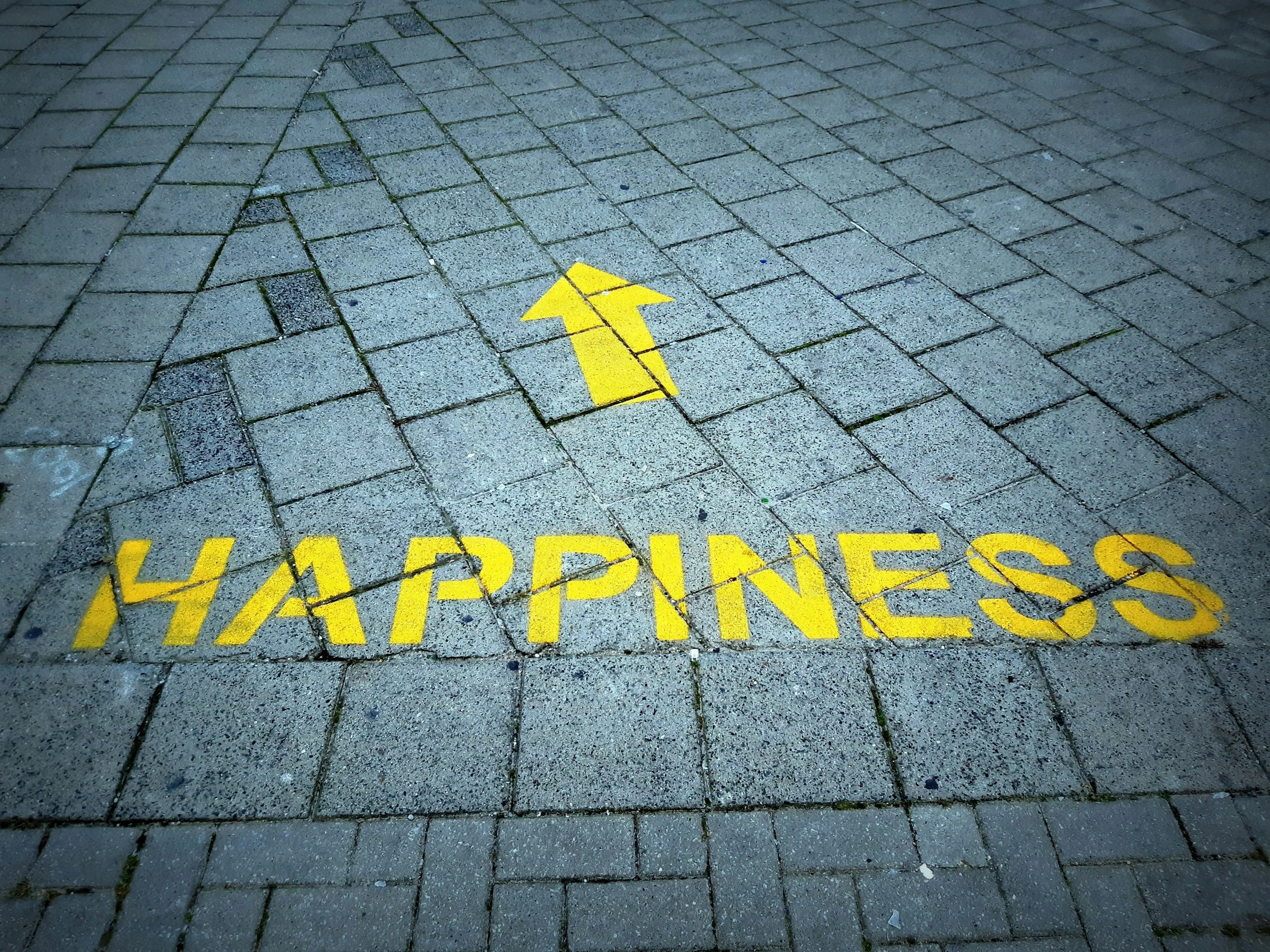
#9 - Happiness pt. 1: Happiness is Simple but HARD
Mental health/therapy in pursuit of feeling happier and more satisfied with life does not have to be complicated. Sure, there are times where a dive into a complicated and painful past can be productive and helpful in that it will answer perhaps the “why” of our patterns, responses, emotional raw spots, etc. But understanding can only get you so far; at some point, you are faced with the question of “now what?”. It is a delicate place to be in therapy. It is an uncomfortable place to be. Because now you are taking on ultimate responsibility for your choices. My argument is that those choices - the choices you must now make to feel better, to feel healthier and happier, and to live a life of deep satisfaction may be difficult but they are simple.
The first choice is to “remove the spoon”. The concept of “removing the spoon” comes from an old joke:
Patient: Hey Doc, every time I take a sip of coffee I get a pain in my right eye.
Doctor: Take the spoon out of the cup.
Call it a type of bias or selective blindness, but how often do the answers to our problems involve the removal of something that is causing pain and yet we are consciously or unconsciously choosing not to remove it? While this removal of the spoons in our lives can be painful and come with serious trade-offs that need to be examined and taken into consideration, it nevertheless can be the key to long-lasting change. The pain that comes from the removing of these spoons (setting boundaries, letting an unhealthy relationship die off, weathering the tantrum of your young teen who needs his phone taken away) is undeniable, but so is the long term and WORSE suffering that will come if we leave these spoons in our cups.
Okay, so now that you’ve removed the unhealthy and harmful elements of your life, it is time to replace them with healthy and helpful rituals, habits, and practices that leave us feeling deeply satisfied and that our lives, while not always “happy” are still good.
To know what to fill your life with will require attentiveness - pay close attention to when you are feeling truly good (deep satisfaction) vs just better (pleasure). But what is meant by “truly good” vs “better”? To feel truly good is a result of living in alignment with not just any value system but a system of values that have been shown to lead to a life of internal and external peace, strength, purpose, healthy and reciprocal connection with others, and most importantly a meaningful satisfaction. It is living a life of virtue. Virtuous teachings we choose to follow, behaviors we do, aspects of our lives that we prioritize, characteristics that we strive to emulate, undeniably leave us with a sense that our integrity is preserved and not only are we uplifted but so are those around us.
To feel “better” is a momentary/temporary increase in mood. It is the pursuit of pleasure. But moods shift - sometimes very quickly, and we eventually come back to a certain baseline. This sudden increase in mood (pleasure seeking) is very dopamine driven and can be the result from a chemical reaction from eating a PB&J, drinking alcohol, watching porn, etc. Famed neuroscientist and host of the Huberman Lab podcast, Andrew Huberman in a recent episode of his podcast laid out a great rule - beware of unearned dopamine.* Unearned dopamine is not lasting, it wasn’t earned, but it’s dangerous because it programs our brain to consistently seek the easy wins in life that require very little of us and yield massive pleasurable feelings; and it’s these easy wins that usually lead to misery and a life lacking in meaning. Virtue on the other hand is the opposite: it’s a slow burn, it requires much of us but what it yields is a deeper sense of safety and security as well as reasons to be happy (relationships, meaningful work, soul-strengthening experiences).
So, if we spend most of our time (notice, “most” and not “all” - for even the best of us need moments of non-destructive pleasure now and then in the form of that extra episode of a series we’re watching or that delicious slice of cake) pursuing that which is meaningful and deeply satisfying we establish for ourselves reasons to be happy and not just chemical causes to be happy.
After all of this attention paid to what leads to happiness I propose a principle to cement into your psyche: that your happiness is tied to virtuous activity.
All of this “happiness is virtue” comes from many ancient thinkers but I’d like to highlight one: Aristotle. In The Nicomachean Ethics, Aristotle believes that the key to happiness is living a life of virtue. He says, “It is virtuous activities that determine our happiness, and the opposite kind that produce the opposite effect” (23). In this statement Aristotle states that our happiness is an active process and something within our control. Later he goes on to say, “that happiness is a kind of activity; and an activity clearly is developed and is not a piece of property already in one’s possession” (247). So often we, as people, will view happiness as being predicated upon the possession of possessions. Once I have this, that, the other thing…then I’ll be happy. Aristotle believes happiness is (to an extent) separate from one’s possessions and more tied to “an active process”.
So here is a process for happiness: First, remove that which is harming you. Second, keep track of and identify times, actions, responses, routines, and values that help you to feel truly and deeply good (an alignment with virtue and the health of your soul), and then…do more of that.
We are aware, we are sentient. We are not idiots. Tap into that deepest instinct that lies within you (an instinct that the ancient Greek philosophers, stoics, Jung, Frankl, Christ, Buddha, etc.) all recognized as existing and be honest with yourself.
Start by honestly recognizing what is truly going well in your life and what is not. Then think of a time when things were better. Compare and contrast. Get rid of what you’re doing now that is hurting you and resurrect that which at one point helped you. Given the context of your present moment the “what has once worked” may require some tweaking but that’s okay, take your time, be patient but do not forget nor deny what truly is good for you despite the pain, discomfort, change, regret, etc. that may come with what is required for you to live the life you are meant to live.
Aristotle says it best:
“The function of man is a kind of life, namely, an activity or series of actions of the soul, implying a rational principle; and if the function of a good man is to perform these well and rightly; and if every function is performed well when performed in accordance with its proper excellence: if all this is so, the conclusion is that the good for man is an activity of the soul in accordance with virtue, or if there are more kinds of virtue than one, in accordance with the best and most perfect kind” (16).
References:
The Nicomachean Ethics - Aristotle (Penguin Classics, 2004)
* Huberman Lab Podcast, “Understand & Apply the Psychology of Money to Gain Greater Happiness”. Dec 2, 2024.