
A Return to the Shire: Happiness Part 2
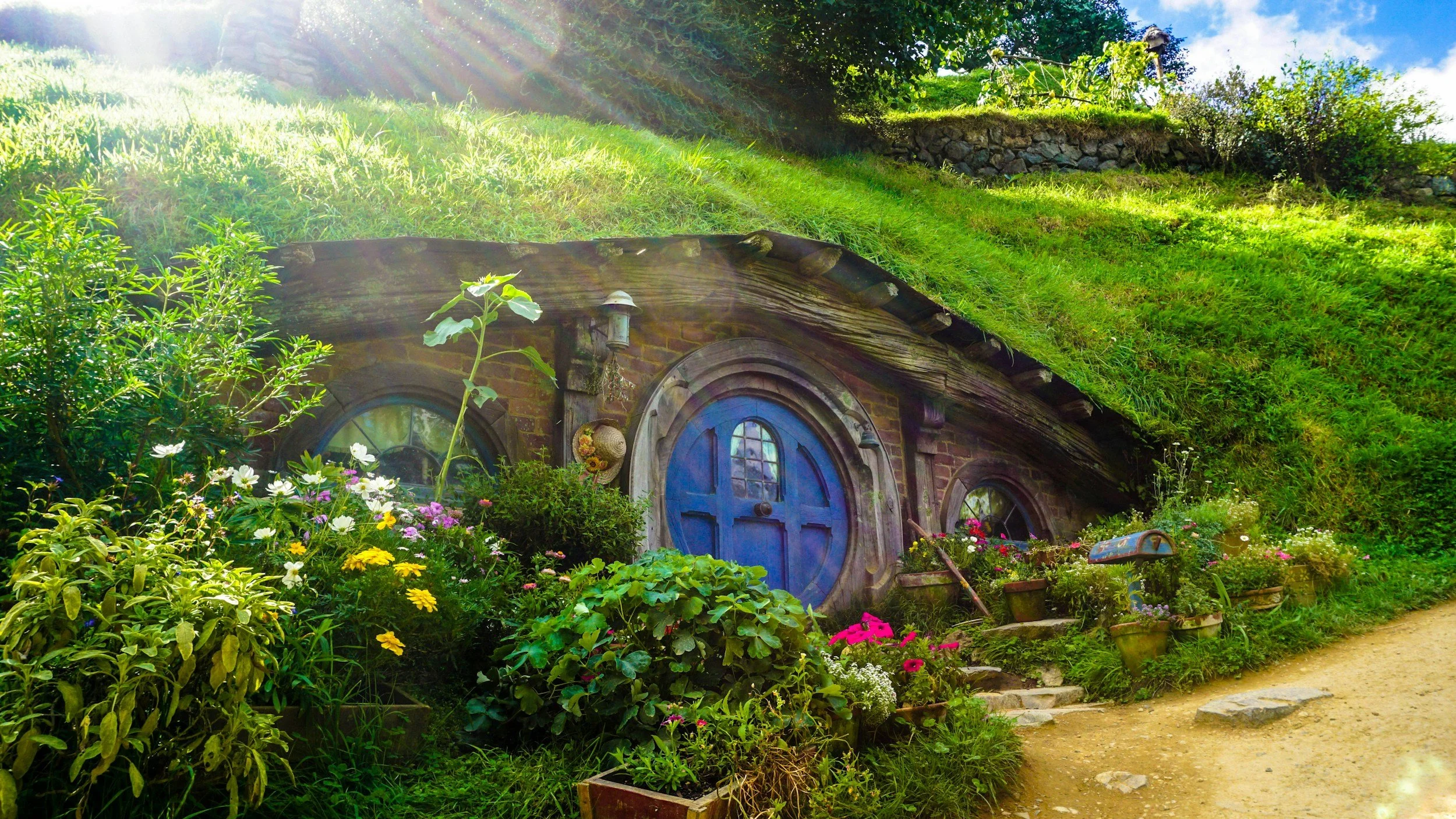
I share a theory or philosophy with a dear friend of mine and fellow Lord of the Rings nerd: “Return to the Shire”. When you think of characters or a group of fictional people that exude happiness, it would be difficult to find a more happy people than the Hobbits. Let’s look at how they live, who they are and see if we can’t pull out some characteristics/values that we can adopt in our own lives to be more happy. By doing so, we all can then return to a value system or way of living that is fundamentally simple, good, and meaningful.
Let’s look at a few excerpts from both The Hobbit and The Lord of the Rings and see if we can’t make some inferences as to what the Hobbits value as a society/as a people. As we do this, be thinking about what you can do to return to a Shire way of living.
First The Hobbit:
“In a hole in the ground there lived a hobbit. Not a nasty, dirty wet hold, filled with the ends of worms and an oozy smell, nor yet a dry, bare, sandy hole with nothing in it to sit down on or to eat: it was a hobbit-hole, and that means comfort…
The door opened on to a tube-shaped hall like a tunnel: a very comfortable tunnel without smoke, with panelled walls, and floors tiled and carpeted, provided with polished chairs, and lots and lots of pegs for hats and coats - the hobbit was fond of visitors.”
Hobbits value a comfortable living space - not overly complicated but cozy. Cozy with lots of ways to accommodate guests and company. They value socializing, connection, and fellowship. They see how the richness of their life is tied to the richness of their relationships.
“They are inclined to be fat in the stomach; they dress in bright colours (chiefly green and yellow); wear no shoes, because their feet grow natural leathery soles…and laugh deep fruity laughs (especially after dinner, which they have twice a day when they can get it).”
Hobbits enjoy good food, colors of the earth symbolizing life, growth, renewal, and health. Wearing no shoes shows a connection to nature. To laugh (especially after a meal) implies an approach to life to not taking things so seriously and the value of communal interaction over food (something we as a society and most importantly as families are losing touch with).
After helping the dwarves retrieve their gold from the dragon Smaug, Bilbo is given the chance to choose his own payment/reward. It says, “In the end he would only take two small chests… ‘That will be quite as much as I can manage,’ said he.”
Bilbo is aware of his limitations. He knows riches can only add so much to his life and while he enjoys being comfortable, he knows that there is much more to life than silver and gold. Additionally, he is fully aware of the headaches that too much wealth can bring.
Perhaps one of my favorite lines from the Hobbit is at the very end as Bilbo and Gandalf are reminiscing of their past adventure as they smoke their pipes. Bilbo gets overwhelmed with the part he played in the adventure, almost giving himself too much credit for his role in the whole thing and tying himself to a grandiose plan that is universal in scope - afraid of what could’ve happened if he hadn’t accomplished his task. Gandalf then says, “You are a very fine person, Mr. Baggins, and I am very fond of you; but you are only quite a little fellow in a wide world after all. Thank goodness! Said Bilbo laughing, and handed him the tobacco jar.”
With a society seemingly obsessed with the self, valuing fame, likes, subscriptions, followers, etc. it’s refreshing to hear a character find relief at NOT ‘going viral’.
Now, onto Lord of the Rings. Tolkien gives some deeper insight into the way of living found within the Shire:
“They love peace and quiet and good tilled earth: a well-ordered and well-farmed countryside was their favorite haunt. They do not and did not understand or like machines more complicated than a forge-bellows, a water-mill, or a hand-loom, though they were skillful with tools.”
“Their faces were as a rule good-natured rather than beautiful, broad, bright-eyed, red-cheeked, with mouths apt to laughter, and to eating and drinking. And laugh they did, and eat, and drink, often and heartily, being fond of simple jests at all times, and of six meals a day (when they could get them). They were hospitable and delighted in parties, and in presents, which they gave away freely and eagerly accepted.”
Once again, we see a people that value simple living, a connection to the earth, working with their hands, development of skills, good food and drink, laughing and a sense of humor, and receiving/giving of their time and efforts to help others feel happy.
Tolkinen goes on to say “Nonetheless, ease and peace had left this people still curiously tough. They were, if it came to it, difficult to daunt or to kill; and they were, perhaps, so unwearingly fond of good things not least because they could, when put to it, do without them, and could survive rough handling by grief, foe, or weather in a way that astonished those who did not know them well and looked no further than their bellies and their well-fed faces.”
“They shot well with the bow, for they were keen-eyed and sure at the mark. Not only with bows and arrows. If any Hobbit stooped for a stone, it was well to get quickly under cover, as all trespassing beasts knew very well”.
The Hobbits or “Shire-folk”, are not just soft party goers. They are resilient. They know how to do without. They use the memories of the past and the potential pain of the future to increase their gratitude for what they have in the moment. That is why they value and exaggerate the good things they have. They are hardy, strong, and self-sufficient.
Much later in the story, there is a brief moment where Sam and Frodo are separated, requiring Sam to wear the ring of power for safe keeping on a chain around his neck, until it can be returned to Frodo. The ring immediately begins to tempt Sam:
“As Sam stood there, even though the Ring was not on him but hanging by its chain about his neck, he felt himself enlarged, as if he were robed in a huge distorted shadow of himself, a vast and ominous threat halted upon the walls of Mordor….Already the Ring tempted him, gnawing at his will and reason. Wild fantasies arose in his mind; and he saw Samwise the Strong, Hero of the Age, striding with a flaming sword across the darkened land, and armies flocking to his call as he marched to the overthrow of Barad-dur. And then all the clouds rolled away, and the white sun shone, and at his command the vale of Gorgoroth became a garden of flowers and trees and brought forth fruit. He had only to put on the Ring and claim it for his own, and all this could be.
In that hour of trial it was the love of his master that helped most to hold him firm; but also deep down in him lived still unconquered his plain hobbit-sense: he knew in the core of his heart that he was not large enough to bear such a burden, even if such visions were not a mere cheat to betray him. The one small garden of a free gardener was all his need and due, not a garden swollen to a realm; his own hand to use, not the hands of others to command.”
I underlined that last sentence to emphasize Sam’s wisdom, humility, and goodness. With the entire world offered to him what does Sam do? He stays true to his values and virtuous living. He communicates to the ring a message from his own heart - you have no power over me for I value freedom, simplicity, and the opportunity to make a quiet and peaceful life of my own.
Lastly, on the slopes of Mount Doom, when all hope is seemingly lost, Sam begins to sing:
“Though here at journey’s end I lie
In darkness buried deep,
Beyond all towers strong and high,
Beyond all mountains steep,
Above all shadows rides the Sun
And stars for ever dwell:
I will not say the Day is done,
Nor bid the Stars farewell.”
Sam, a Hobbit, a son of the Shire, is a resilient and hopeful being. He never loses hope and with that hope he retains his steadfastness even in the face of utter destruction.
The Shire is a state of mind. The Shire is the natural consequence of living a certain set of values and holding onto those values. One can make the argument that the Shire or the Hobbits are too simplistic, too traditional, and not very “progressive”, but one must think “progress towards what?” Would it not be “progress” towards a healthier and happier life to return to a Shire of our own? A state of mind/being/circumstances where things are simpler, and the small things in life are placed at a higher value? Things that actually matter? Like relationships, good food, good books, humility, helping others, sharing meals with loved ones, working with one’s hands, less screens, etc.
We tend to overcomplicate happiness - a “Return to the Shire” is needed.
References:
The Hobbit - JRR Tolkien
The Lord of the Rings - JRR Tolkien