
Mental Illness or Moral Illness? Pt. 2: Virtue is the Cure
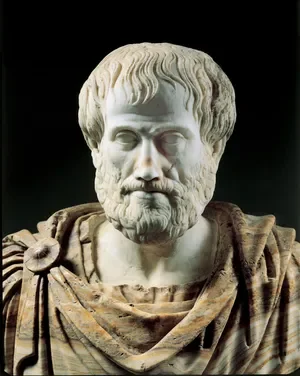
If you are struggling with symptoms of “mental illness” and are wanting to read something that will help get your life in order, to help you break patterns, and to actually make long lasting change, then I would recommend you stay away from the “self-help” section of your book store. Instead, head to the philosophy section and pick up the Nicomachean Ethics by Aristotle.
In this masterpiece of western philosophical virtue ethics, Aristotle addresses the question “Where does happiness come from?” He says, “Is happiness something that can be learnt, or acquired by habitation or cultivated in some other way, or does it come to us by a sort of divine dispensation or even by chance?” The answer, according to Aristotle, of where happiness comes from is not in circumstances, riches, subscribers, or likes (tangent: what would the pre-socratic philosophers think of social media?) but rather in virtuous activity. He says, the following in the Nicomachean Ethics:
“Probably it is not right at all to follow the changes of a man’s fortunes, because success and failure in life do not depend on these; they are merely complements, as we said, of human life. It is virtuous activities that determine our happiness, and the opposite kind that produce the effect.” (23)
To help support Aristotle’s point, here is an excerpt from British psychiatrist Theodore Dalrymple whose career was spent treating incarcerated criminals as well as their victims in the prisons and hospitals of London:
“If someone admits to unhappiness, it might be that his own ill-conduct, foolish or immoral, has contributed to it; but if he is depressed he is the victim of an illness, of something which, metaphysically speaking, has fallen from the sky. This makes of the person an object rather than a subject; and while there are circumstances in which a person is a pure and unadulterated victim, an object as it were, they are relatively few where the workings and content of his mind is concerned.” (75-76)
Back to Aristotle. While he goes on to differentiate intellectual vs moral virtues, let us focus on the moral. Ultimately, moral goodness is the result of habit. “The moral virtues, then, are engendered in us neither by nor contrary to nature; we are constituted by nature to receive them, but their full development in us is due to the habit” (31). Apart from the genuine, clinical psychopath, as Aristotle says - we are all constituted to receive them (the moral virtues). Our minds are gardens ready to be planted with good seeds and for those seeds to be cultivated.
Here is a simple formula for finding what the virtuous choice/action is at any moment. Aristotle sees virtue as a “golden mean” (an average). Well, an average between what? An average between the two extreme polarized versions of that virtue on either side of a spectrum.
Let’s take the virtue of courage as an example. If courage lies somewhere on a spectrum, what are the extreme ends of either side of that spectrum? It would be recklessness and on the other side, cowardice. Take, for example, a burning building. A man running into a burning building without quickly canvassing the layout of the house, an entrance somewhat clear of flame, not perhaps wrapping a soaked t-shirt around his head, etc might be touching on the side of recklessness. However, a man just running away from the fire, knowing there are children inside? - cowardice. So finding the average of the two sides (obviously leaning away from cowardice and more towards recklessness) you would find “courage”. Courage lies between its two extremes of deficiency (cowardice) and its excess (recklessness). Aristotle says “ we must consider this fact: that it is in the nature of moral qualities that they are destroyed by deficiency and excess…whereas the right quantity produces, increases and preserves it”. (34)
What about those who are never explicitly taught or modeled virtuous living? Well, it is still in their nature to learn. If they’ve learned evil, they can learn good. Of course it’s easier if they have models in their life - that is where you, the reader come in - to take opportunities to first live virtuously yourself, and then to pass on the knowledge.
“Again, of all those faculties with which nature endows us we first acquire the potentialities, and only later effect their actualization” (31).
So, for the sake of learning, practicing, and actualizing virtue yourself - and as a way to teach it further to those who are in your care, let’s provide a formula -
Virtue is defined as a mean - a mean between two kinds of vices. How does one find that golden average? 3 rules of generally good conduct are provided by Aristotle (48) -
Keep away from the extreme that is more contrary to the mean
Notice errors of where you may fall, do the opposite direction
Guard against pleasure or doing the most pleasurable thing
Just as there is no pill that makes us happy there is no pill that makes us virtuous - are there medications that might make it easier to choose the right? Perhaps, but even then, the most “mentally healthy” amongst us still face moral dilemmas and when we choose poorly - we get a bit sicker.
We have been flooded and inundated with the “over psychologizing” of moral behaviors. Please stop trying to explain everything away with a diagnosis. While sometimes people are damaged and it makes things harder, and while there must be room for understanding and compassion, that nuance and empathy is meant to help explain and inform (to help decide the best approach and by possibly identifying the underlying issues) but never to excuse or justify. Is it not more compassionate to help those around us see that within them, within their nature there is first and foremost “potentialities”? Potential to choose, to act in a way that can lead to a life of meaning away from pointless suffering? This approach is indeed more compassionate and it is an approach we can all first adopt ourselves, and then find ways to teach it to those around us - especially our children.
We all want to live a happy life ourselves and if you’re a good and decent parent you want happiness for your children. Let us take an approach to happiness not through pleasure but through virtue. We may experience circumstances or pain and suffering that is not our fault that if not dealt with properly, can lead to mental illness. However, while it may not be our fault, it is always our responsibility. To echo Marcus Aurelius “It’s time you realized that you have something in you more powerful and miraculous than the things that affect you and make you dance like a puppet”. The things that affect us and make us dance like puppets, pleasure or pain, are NOT us. We are more powerful than that and when we recognize that, and act on it, the first steps towards a happier, and more mentally healthy life, have been taken.
“Nothing can bring you peace but the triumph of principles”. - Ralph Waldo Emerson
References
Nicomachean Ethics by Aristotle
Admirable Evasions: How Psychology Undermines Morality by Theodore Dalrymple
Meditations by Marcus Aurelius
The Collected Writings of Ralph Waldo Emerson